RCSA (Risk & Control Self-Assessment)
141 pre-populated fintech risks with control assessments, questionnaire framework, and testing calendar.
About This Template
RCSA sounds like something that requires a 20-person risk department. It doesn't. This kit gives you a complete RCSA program — pre-populated with 141 fintech risks, a questionnaire framework for self-assessments, a control testing calendar, and a 34-page guide walking you through running your first RCSA cycle in 30 days. Includes a chapter on running an RCSA when you have no existing controls documentation — because that's the reality for most early-stage fintechs.
The questionnaire framework is designed so business line owners can self-assess without needing a risk background — each question includes context, examples, and a plain-English scoring rubric. The control testing calendar maps out what to test and when, with suggested frequencies based on risk tier. By the end of your first cycle, you'll have a defensible view of your control environment that actually means something.
🎉 First-Time Buyer?
Enter your email to get 20% off this purchase.
Who Is This For?
- → You're building a risk program and need to show your control environment
- → An examiner or bank partner asked for your RCSA and you don't have one yet
- → You have a Risk Register but can't answer "are your controls effective?"
- → Your business line owners need to self-assess but don't have risk backgrounds
- → You need board-level reporting on control effectiveness within 30 days
Preview
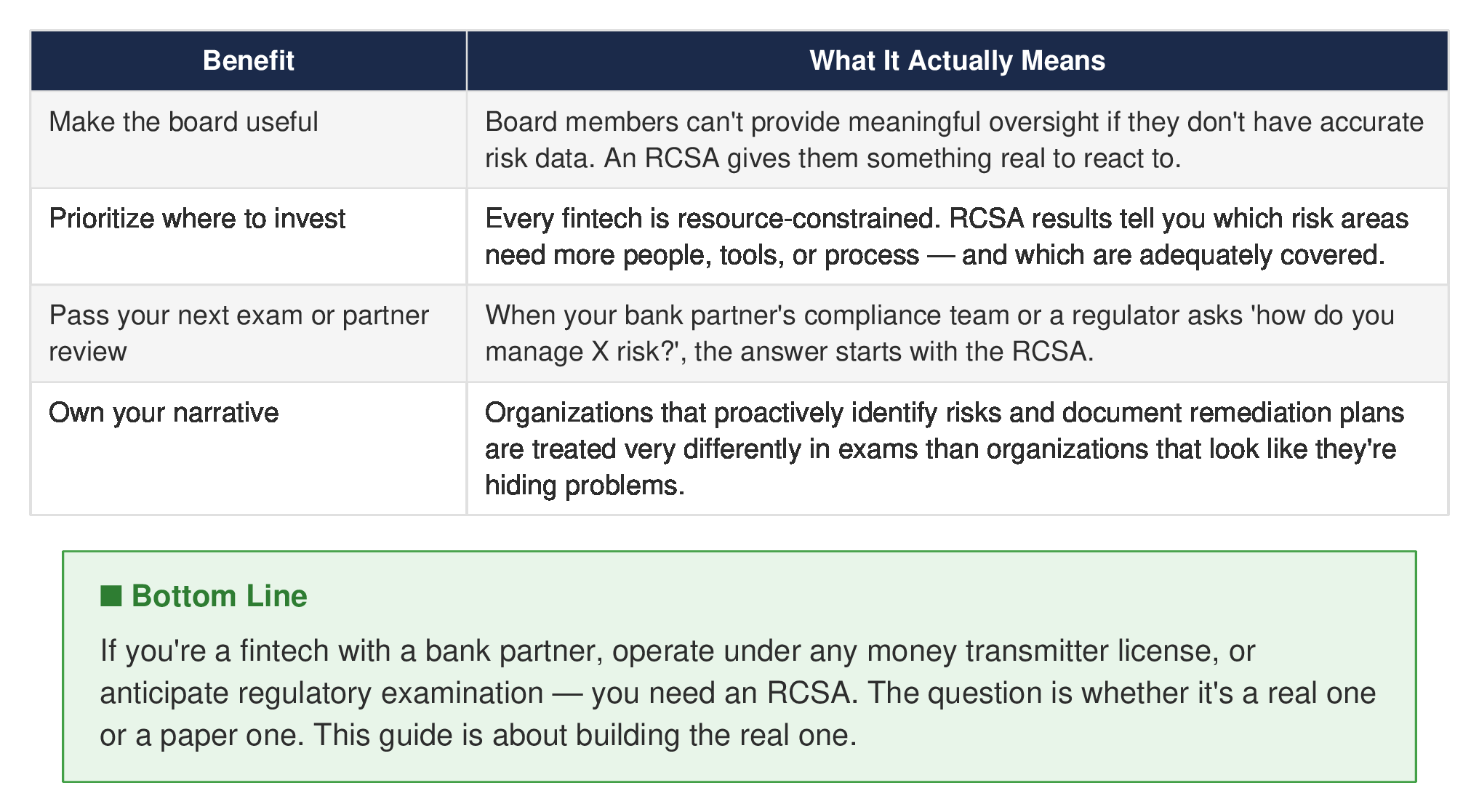
RCSA benefits explained — what each one actually means for your risk program
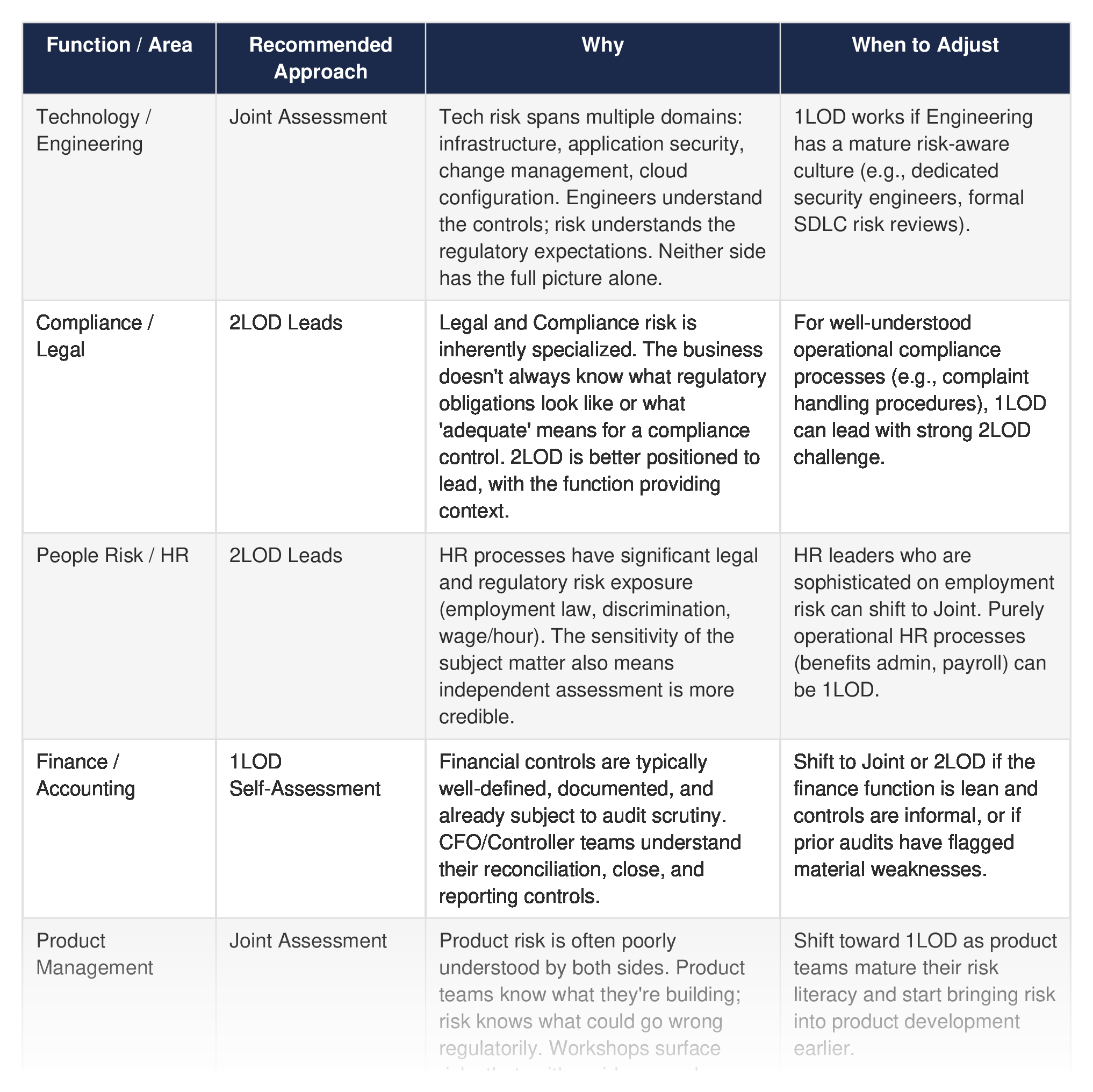
RCSA approach selection guide — 1LOD, 2LOD, and Joint models by function and risk type
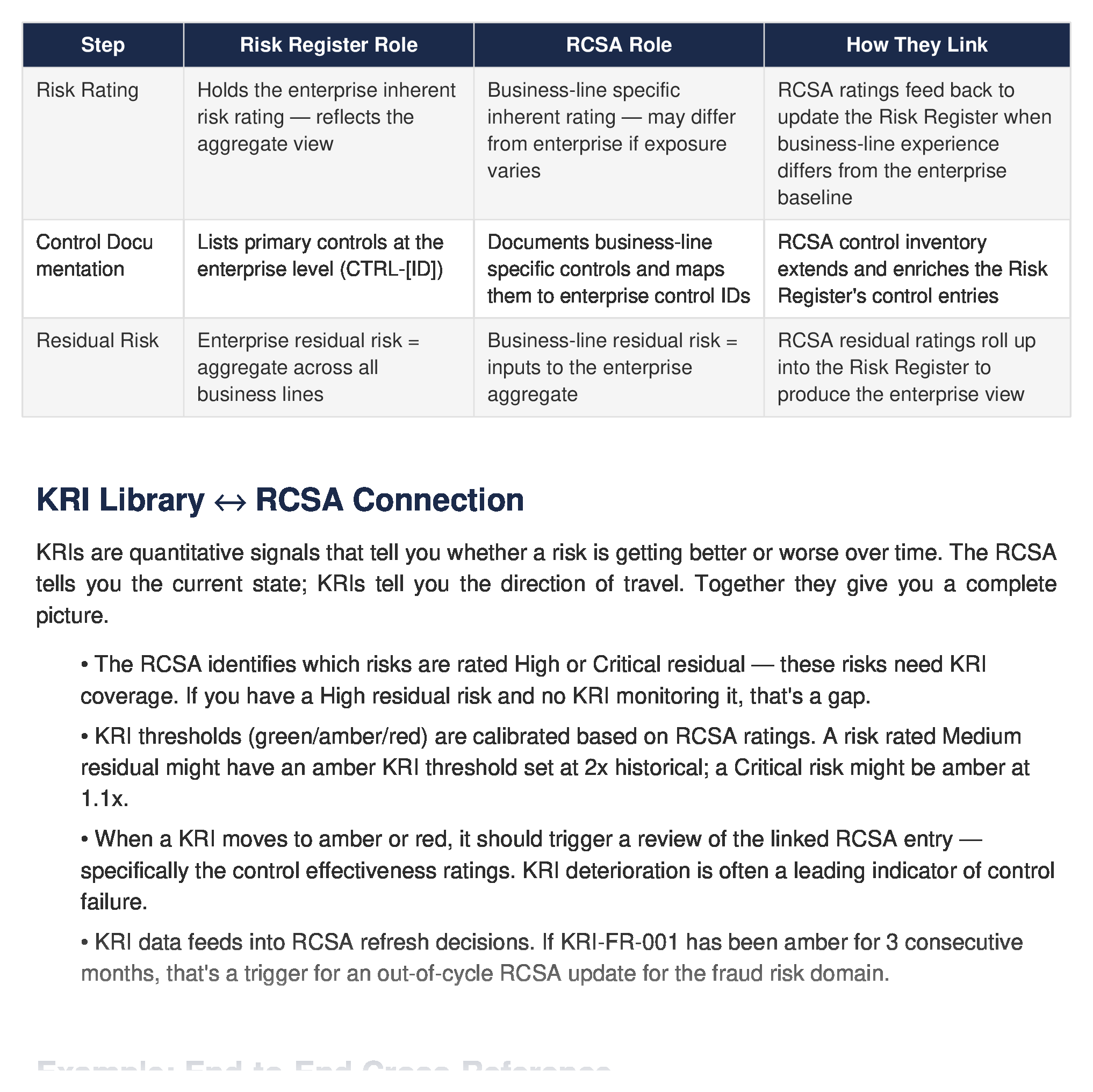
How RCSA connects to your Risk Register and KRI Library — the risk program ecosystem
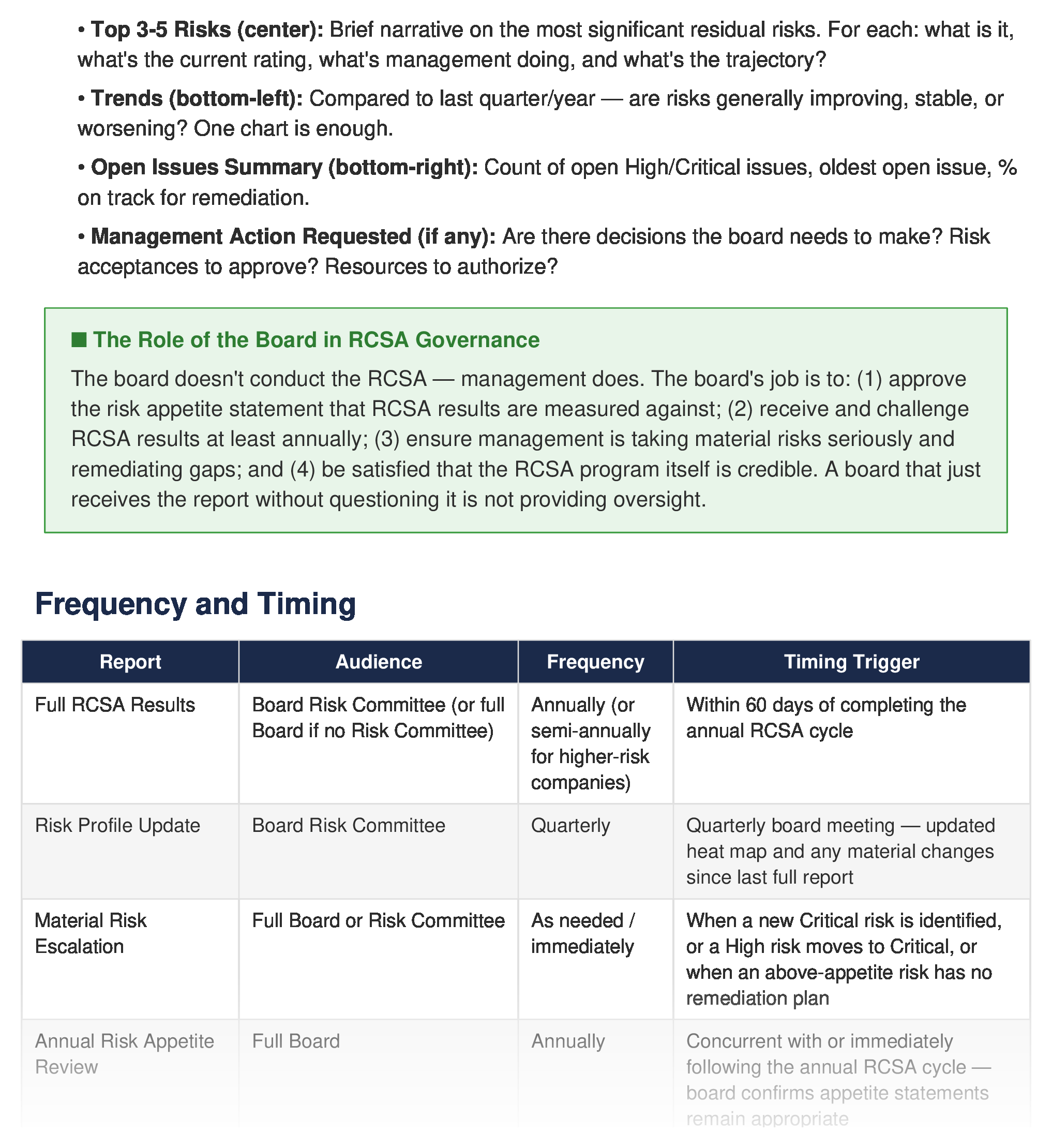
Board-level RCSA reporting — top risks, heat maps, and movement trends
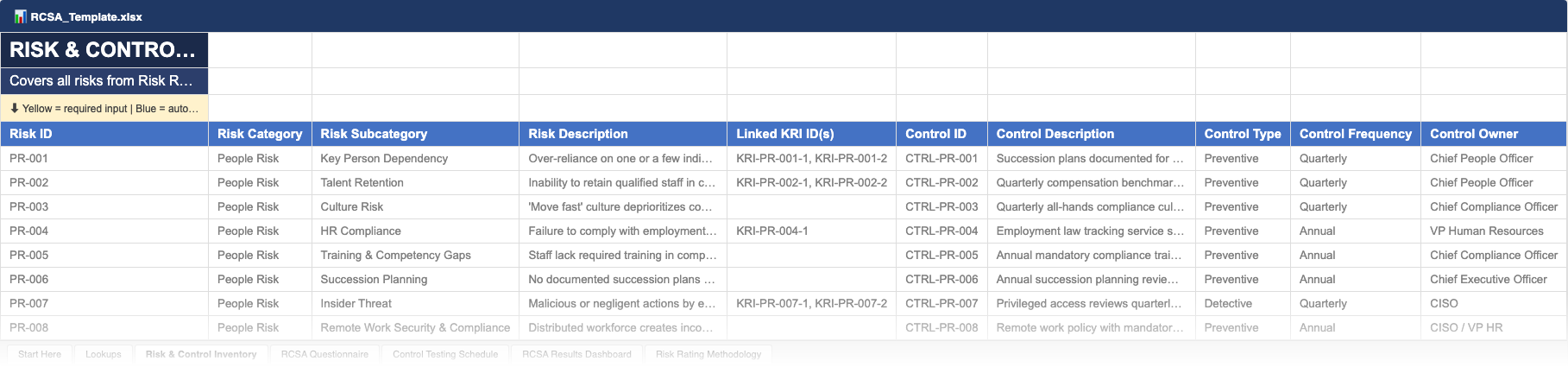
Excel template — Risk and Control Inventory with 141 pre-populated assessments and effectiveness ratings
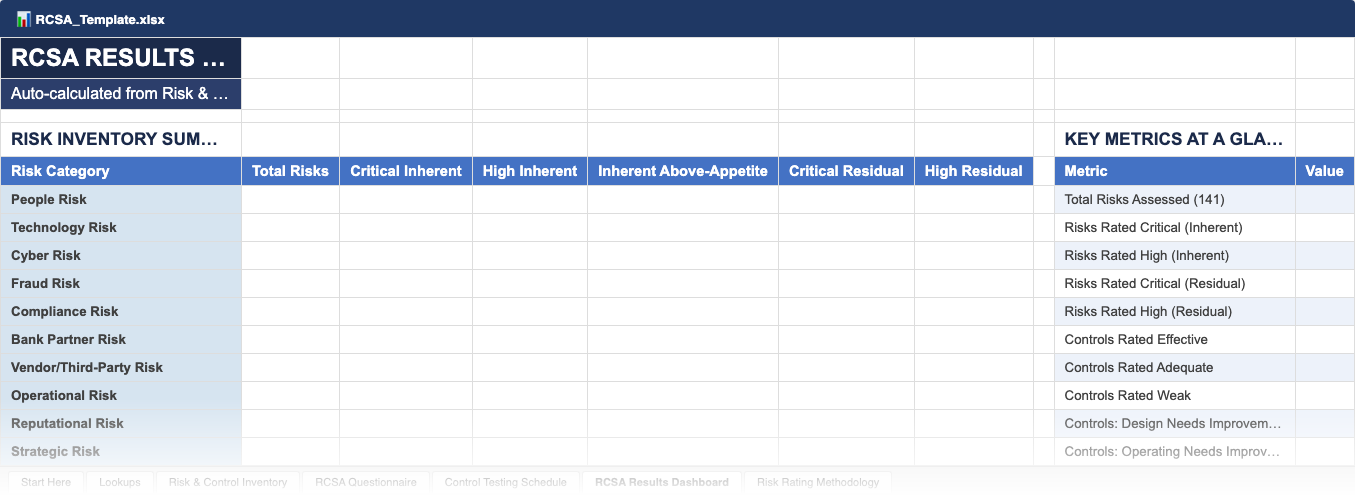
RCSA Results Dashboard — control effectiveness distribution, high-risk areas, and remediation priorities
What's Included
- 141 pre-populated risk assessments
- Control effectiveness scoring
- Self-assessment questionnaire framework
- Control testing calendar
- Guide for teams with no existing controls
- RCSA cycle implementation in 30 days
30-Day Money-Back Guarantee
If this template doesn't meet your expectations, email us within 30 days for a full refund. No questions asked.
Frequently Asked Questions
How are the 141 risk assessments organized?
They're grouped by the same 21 risk categories used in our Risk Register — credit, compliance, cyber, vendor, model risk, etc. Each assessment includes a risk description, control mapping, effectiveness rating, and residual risk score. If you're already using the Risk Register, the risk IDs map directly.
Do I need existing controls documentation to use this?
No — the guide includes a dedicated chapter on running your first RCSA when you have no existing controls inventory. It walks you through documenting controls as you discover them during the assessment process, so the RCSA itself becomes your first controls inventory.
What's the difference between this and a Risk Register?
A Risk Register lists your risks. An RCSA evaluates whether your controls are actually working against those risks. Think of the Risk Register as "what could go wrong" and the RCSA as "are we doing enough about it." They're complementary — most mature programs have both.
Can business line owners fill this out without a risk background?
Yes — the questionnaire framework is designed for non-risk people. Each question includes context explaining why it matters, examples of good vs. weak controls, and a plain-English scoring rubric. You send it to a business line owner, they fill it out, you review the results.
How long does the first RCSA cycle take?
The guide includes a 30-day implementation plan. Most teams spend week 1 on setup and scoping, weeks 2-3 on assessments with business line owners, and week 4 on analysis and reporting. After the first cycle, subsequent cycles are faster because you're updating rather than building from scratch.
How does this connect to KRIs and the ERMF?
The RCSA results feed directly into your KRI thresholds (if a control is rated weak, the related KRI threshold should be tighter) and your ERMF reporting (the RCSA provides the control environment view your board needs). All three products use the same risk taxonomy for seamless integration.
Not ready to buy?
Try our free Risk Register first — no payment required.
Download Free Risk Register →Related Products
Enterprise Risk Management Framework (ERMF)
Complete ERM documentation: risk appetite, 3 Lines of Defense, committee charter, and board reporting.
KRI Library (132 Key Risk Indicators)
132 KRIs with thresholds, data sources, and escalation triggers pre-built for financial services.
Risk Register — Fintech Edition (Free)
141 pre-populated fintech risks across 21 categories. ISO 31000 structure. Ready to use in a week.
Ready to Get Started?
Get the RCSA (Risk & Control Self-Assessment) and start building a defensible risk program today.